Legal
The Impact of Hispanic Representation on the Travel Industry
A decade ago, the Hispanic travel market was a niche, and many marketing agencies considered it too small to devote time and resources to. Fast forward to the present, and agencies are now eager to tap into the trillion-dollar market, and for a good reason. Research shows that Hispanics travel more across all income levels, especially among affluent Hispanics with household incomes of $80K+. They tend to spend more while traveling and travel with larger parties.
In 2019, Hispanics spent $113.9 billion on domestic leisure travel, accounting for 13% of all domestic leisure travel that year. But the travel industry is still leaving money on the table and could benefit from making a few tweaks in its outreach to Hispanics and other underrepresented groups.
Hispanic Travel Habits
As with all underrepresented groups, Hispanics want to feel seen and heard by the travel industry, from advertising to bookings. This starts with a deep understanding of Hispanics and how identity, language, culture, and other factors impact their behavior, motivations, and purchase decisions. Hispanics are poised to become 30% of the U.S. population by 2050 and are rapidly joining the middle class, making connecting with them a top priority.
[bctt tweet="Essential to building relationships with Hispanics is addressing stereotypes and false assumptions." username="@ThinkNowGlobal"] As mentioned earlier, Hispanics are becoming increasingly affluent. It’s often said that if they were an independent country, they’d have the world’s seventh-largest economy. U.S. Hispanic travelers spend more money and travel more than the non-Hispanic U.S. population. To be exact, 31% of U.S. Hispanics travel internationally compared to 18% of non-Hispanics. Texas, California, and Florida are their top three domestic destinations.
An affluent Hispanic traveler spends an average of $6,000 per trip, about 30% more than the rest of U.S. travelers, and makes two more trips per year. This will only increase as more U.S. Hispanics enter the middle class.
Hispanic Representation
As immigration slows, language habits among U.S. Hispanics are shifting, which could impact marketing messages. Although many Hispanics speak or are familiar with the Spanish language, they prefer to speak English or only speak English, especially younger demographics like Gen Alpha, Gen Z and some Millennials. Neither of these groups like being targeted in Spanish.
[bctt tweet="Marketers need to deliver cultural relevance." username="@ThinkNowGlobal"] Hispanics want to be represented in American society, not reduced to cheezy Spanish language commercials that skew more toward parody than fact. Hispanic representation requires cultural research, which dives into the nuances of this audience, and creatively uses language to communicate culture.
Finding the Balance
Hispanics are shaking up the travel industry, and wielding their influence to change the narrative of Hispanic travelers. Travel brands, including those in hospitality, entertainment and dining, and destination management, must work to ensure Hispanics feel that their culture is seen and welcomed in those spaces and thoughtfully integrated into all aspects of it. The company that can find the right balance in marketing to Hispanics will tap into a massive revenue opportunity.
we demistify diverse communities through research technology
Legal
Keeping it 200: How Latinos Navigate the American Experience
Latino immigrants once feared that practicing their native cultures would make them seem "less American" and thus less accepted, so they tried to acculturate to American ways of life quickly. Fortunately, most Latinos have evolved in how they see themselves. They embrace the concept of the "the 200%" (100% Latino and 100% American) and the ability to be ones authentic self without abandoning who they are. Language has been one of the biggest indicators of that. In the past, immigrant parents may have insisted that everyone in the household speak only English and stifle their native tongue.
But today, bicultural bilingual households across the U.S. are thriving, primarily driven by younger generations who refuse to conform or apologize for their lineage. Gen Z is the first multicultural majority generation, and Latinos have the highest rate of interracial marriage.
So how should marketers engage this demographic? Connecting with the new mainstream requires understanding the dynamics they navigate daily, taking into account their cultural lens, contextual environments, and behavior. To do that, they must be invited to the conversations and a part of the decisions being made. By relying on people with these experiences, you can assess the authenticity of your marketing efforts and decrease the chance of missing the mark.
In this episode of The New Mainstream podcast, Vanessa Vigil, General Manager, mitú, distills the notion of "the 200%" and why it's important for marketers to dive deeper into multicultural consumer insights.
we demistify diverse communities through research technology
Legal
Challenging Gender Stereotypes, Showing Greater Empathy
After taking a Behavioral Economics class at Florida State University, Lauren Triplett knew she had found her passion. Marketing bridges the gap between brands and consumers by helping marketers understand why people do what they do and purchase what they purchase. Lauren found this fascinating and spent the next few years building her expertise, including starting her own digital marketing agency and working for less to gain experience.
Fast forward a few years, amid a global pandemic, Lauren landed a job at one of the most beloved brands in the world, Mattel.
As Associate Marketing Manager of the Barbie Global Brand at Mattel, Inc., Lauren’s team is responsible for the strategy behind the Barbie family segment, including Barbie, her sisters, pets, and the Netflix series. And they have harsh critics – Generation Alpha.
This young consumer group, powered by the pocketbooks of their Millennial moms and dads, represents a treasure trove of revenue for the brand. Like their predecessors, Gen Z, these "mini millennials" also challenge the brand to address societal stereotypes, particularly around gender identity. Mattel has released inclusive product lines like Barbie Fashionista featuring dolls of varying body shapes, abilities, hairstyles, and gender-neutral dolls.
“The more multifaceted we can make characters, the more kids will be interested and build empathy naturally because they see people that look different on the shows and products they like,” says Lauren. The intention is to take inclusivity from being a checkmark in a box to a storyline featuring loveable characters kids will be interested in regardless of background.
Tune in to the latest episode of The New Mainstream podcast as Lauren Triplett, Associate Marketing Manager, Barbie Global Brand at Mattel, Inc. and founder of BiteSized Consulting discuss the evolution of gendered toys and how inclusivity leads to greater empathy.
we demistify diverse communities through research technology
Legal
Is Black Girl Travel Magic? Decoding Travel Habits
The 2017 film Girls Trip paid homage to Black women shouting “wheels up” as they board flights to various destinations around the world. A study of 900+ Black millennial women found that 42% have taken 1-2 vacations over 5+ days in the past 24 months, and an additional 28% have taken 3-4 vacations over the same period.
Pre-Trip Planning
For Black women, preparing for the trip is just as important as taking the trip. This is where brands come in. Most respondents state they shop online a few times a month, with clothing making up 52% of purchases. When deciding what to buy, they’re most influenced by family and friends, with brands influencing their decision a quarter of the time. So that means they’re checking in with their girlfriends on which outfits to take and which shoes to wear, and which site has the best deals, especially if they’re traveling together, to ensure that when they touch down in their chosen city, everything is on point.
Sixty-three percent of respondents state brand authenticity – defined as honesty, caring about the consumer, and high-quality products – is also important. Interestingly, 62% said they have not unfollowed or criticized a brand online, but they’ve likely directed their dollars to the brand that most resonates with them.
Booking Travel
When it comes to booking travel, 59% of respondents state they book online, and 46% prefer package deals. Twenty percent of vacationers say they booked their vacation four weeks ahead of time.
While nearly all travelers state they’ve traveled within the US, nearly half say they’ve traveled outside the US. Top destinations outside the US include Africa, the Bahamas, and Jamaica. Domestically, travelers still seem to favor warm climates as 40% plan to visit Disney World in Florida in the next 12 months.
Black Girl Travel Demographics
On social media, #BlackGirlTravel shows a thriving demographic. Black women are characterized as caring, trustworthy, and responsible. Our data shows that 48% state having enough money set aside for a rainy day, 49% state they sometimes “self-indulge” (and that’s OK!), and when thinking about the future,19% are looking to take out a mortgage which is a step toward building generational wealth.
Brands looking to reach this demographic are most likely to do so through digital streaming (60%) or cable TV (44%). The top watched networks are ABC, BET, and VH1.
It’s a big world out there, and Black millennial women want to explore its four corners. So they invest in themselves and set money aside to ensure they can do that while reaching their financial goals.
Basic Demographics:
- • Household income of $50-60,000
- • 34% have at least some college education
- • 42% own their own home
- • Age: 23-38 (Millennials)
we demistify diverse communities through research technology
Legal
Easy Solves, The Wrong Approach To D&I
People want easy solves. It’s not uncommon for companies and brands to retain the services of an expert in multicultural marketing or diversity and inclusion to be told what to do rather than coming to the table with what they want to do. You have to set the intention. While you may not know how to get there, doing the soul searching needed to uncover the vulnerabilities within your organization is a step in the right direction toward developing a more inclusive culture that impacts how you work, how you hire, and how you market.
Ironically, marketers turn to market research to give them insight into specific audiences. But the challenge within the research industry is its lack of diversity, and it can have a real impact on results. When there is a lack of representation when developing sample frames, for example, the questionnaires lack objectivity. And when you only pull in researchers of color when you want to run a multicultural campaign, your general market campaigns lack that perspective.
Researchers of color are first and foremost researchers and should be considered team members, not just leads on special projects or multicultural checkpoints. The industry needs more people of color to fill the vacancies on these teams. Essential to attracting diverse talent is an inclusive recruiting strategy.
Awareness of market research careers should be raised on the campuses of historically Black colleges and universities (HBCUs) and jobs posted on inclusive job boards like Mimconnect. When candidates are hired, they must see themselves growing at the company. If there isn’t representation at the top in key leadership positions, it sends the wrong message.
In this episode of The New Mainstream podcast, Whitney Dunlap Fowler, founder, A Touch of Whit and Insights In Color and Shazia Ginai, CEO, Neuro-Insight and board chair, Colour of Research (CORe), share their experiences in the market research industry, and how intentionality is key to driving diversity.
we demistify diverse communities through research technology
Legal
Hispanic American Wealth Surges in Record Time
Hispanics are capturing a piece of the American dream as a record number of Latinos move into the middle class. It is estimated that by 2030, the number of Hispanics in the United States will increase from 18% to 30%. As the population has grown, the poverty rate among Latinos has dropped to the lowest levels in recorded history, according to Census data. Median income, however, continues to rise. Hispanics are becoming an immigrant success story similar to those of Irish, Italian, and Asian descent who’ve chosen to settle and thrive in the U.S.
Income Growth
Hispanic Americans' income increased by 20% from 2014 to 2019, the highest rate of all ethnic and racial groups.
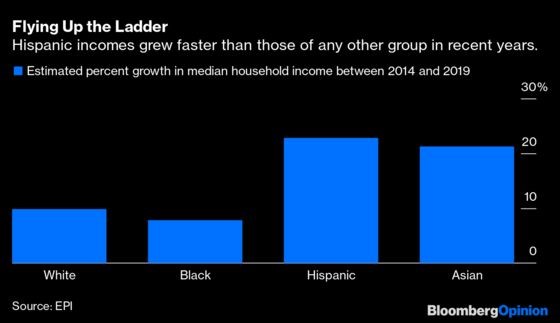
While the income gap between White Americans and Hispanic Americans is still relatively wide, it is starting to close. Is it possible that within a couple of decades the income of Hispanics will rival that of mainstream America? Maybe.
A few factors are influencing Hispanics' rise to the middle class. First, the children of the first wave of immigrants are more educated than their parents. Hispanics now make up about 23% of all people enrolled in school in the U.S. With better access to education, there is a better chance of obtaining more lucrative jobs. Secondly, the new generation of Hispanics are English dominant and not as fluent in Spanish, enabling them to acculturate even further into American society.
Homeownership
Homeownership among Hispanics is one of the most significant indicators of a shift in economic status. Nearly half of Hispanics own a home, an increase of 33% from 2016 to 2019. It's still below White homeownership of 75%, but it’s getting closer. The balance of Hispanics currently renting plans to buy a home in the next five years.
Entrepreneurship is also a key influencer. Hispanics are opening more small businesses than any other racial group in America, and they embrace the free market. According to the 2020 State of Latino Entrepreneurship Report, Latino-owned businesses have grown 34% over the last 10 years compared to just 1% for all other small businesses.
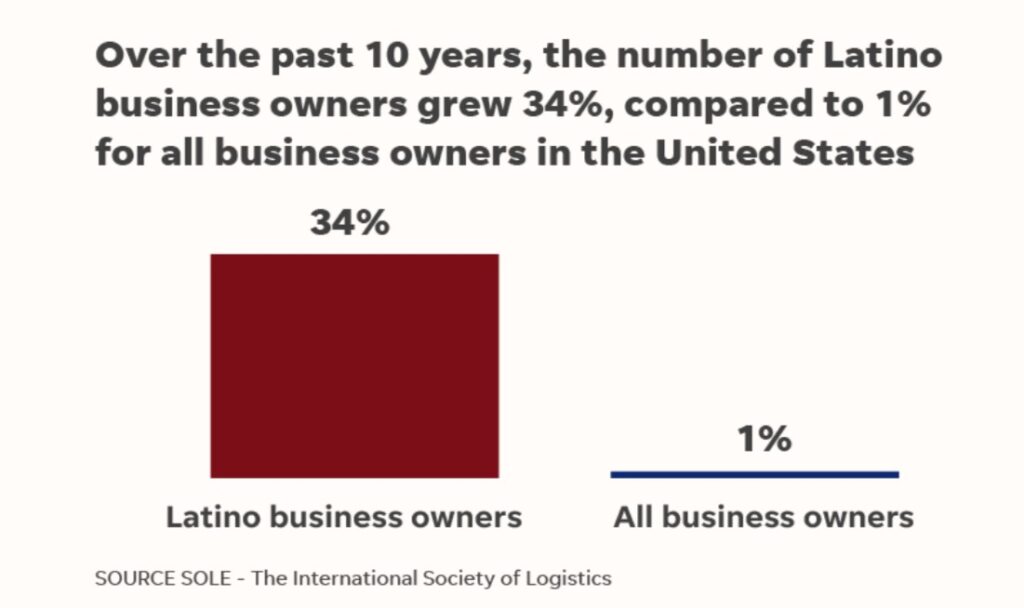
Although Latino-owned businesses have grown rapidly, they lag behind their White counterparts in some areas, such as gross revenue. The average Latino business brings in $1.2 million per year compared to $2.3 million for non-minority firms. Within 20 years, the earning gap is expected to narrow, however.
Interracial Marriage
Hispanic Americans are open to marrying outside their race. A Pew Research report found that intermarriage rates are highest among Latinos and Asians. Interracial marriage could impact the growth of Hispanic ethnicity in the coming years. Multiracial is among the highest growing race group in America, expected to become 90 million of the U.S. population by 2030.
Overall, Hispanics are an American success story. Work ethic, resourcefulness, and unity have laid the foundation for a happy ending.
we demistify diverse communities through research technology
Legal
Serving Up Authenticity in Food and CPG
Food in America is multicultural. It’s a fusion of various tastes, ingredients, and cooking styles from around the world that culminate into a rich flavor profile of cultural diversity. But at its core, it’s American food, representing the swiftly changing demographics in the U.S. as it trends toward a majority-minority nation.
Brands in the food and CPG space are tasked with understanding the consumers driving these trends and showing up authentically, in-person and online. It's becoming increasingly important for brands to take intentional actions like staffing stores and restaurants to mirror the communities they’re serving. Birria lovers craving authenticity, for example, may give a restaurant a side-eye if no one in the kitchen serving up these tasty tacos is Latino. To them, insiders serve as translators, a bridge between the brand and the consumer communicating the needs and desires of the community.
But authenticity often gets misinterpreted in food. Dishes made generations before will naturally evolve based on what is available now and life experiences. Yet authenticity does drive purchases in CPG and food, from ingredients to labeling, especially among Hispanics and African Americans.
Luis Cachua, Director of Multicultural Strategy and Brand Partnerships at Food Beast, stops by The New Mainstream podcast to discuss the importance of authenticity in the food and CPG space and the love of birria tacos!
Listen to the The New Mainstream podcast.