Legal
The Model Minority Myth is Hurting Asian Americans’ Mental Health
ThinkNow recently fielded a comprehensive quantitative study that compared attitudes and behaviors related to health and wellness among minority groups. After reviewing the survey results, I assumed I would write a blog about mental health issues impacting Black or Hispanic Americans. While there were certainly findings that I could have written about among those groups, the results that really struck me were specific to Asian Americans. The Asian American narrative usually revolves around the model minority myth promoting positive stories about education and financial success. However, mental health in the Asian community does not get as much press. The findings were eye-opening.
Statistically, Asian Americans are doing well collectively when it comes to educational and financial attainment. However, our data shows they lag other ethnic groups in seeking mental health services when needed.
Cultural Barriers
Seeking help for oneself runs contrary to the collectivist ideal in Asian culture of placing the needs of others and society before one’s own. This is true in both East and South Asian cultures. The belief is so ingrained that some segments of the Asian American community, especially the foreign-born, don’t have the language to discuss mental health issues. They, instead, think of mental ailments as a physical condition without considering possible psychosocial origins. The concept of mental health was developed in the U.S. and Europe and mainly used western cultural concepts in diagnosis and treatment. The lack of connection to mental health awareness shows up in the data where most Asian Americans surveyed stated not perceiving mental health as a significant contributor to overall health and well-being.
Even when they recognize they might need help with mental health issues, Asian Americans are less likely to feel comfortable seeking that help.
The Dark Side of The Model Majority Myth
Suicide is the leading cause of death among Asian American young adults ages 15-24. Asian youth can become overwhelmed by the expectations to succeed. Although the model majority myth may have its origins in Asian immigrants’ desire to succeed in the U.S., it is perpetuated in mainstream culture by teachers, business leaders, comedians, and the media. Asian students may perceive struggling with school pressures as letting both their parents and society down. Without good examples of what self-care looks like, fewer than 20% of Asian Americans know what to do to keep themselves mentally healthy.
Culturally Appropriate Support
Since fewer Asian Americans currently seek mental healthcare compared to other groups, they are less likely to see other people like them in places that could help them, such as student health centers or clinics. This inadvertently confirms their belief that they don’t belong there. Recognizing this disparity is the first step toward creating inviting spaces for Asian Americans to seek mental health services. Language is not as much of an issue for Asian youth but is a real barrier for older, foreign-born groups. Having in-language material and resources available can be lifesaving.
Training healthcare providers to recognize the additional barriers their Asian American patients may be experiencing can also help increase the uptake of services in this demographic group. Healthcare workers must be culturally competent, understanding the nuances impacting their Asian American patients’ decisions.
How We Can All Help
The model minority myth requires society at large to perpetuate it. Reflecting on our beliefs about what a scientist, artist or carpenter looks like can help open more doors for Asian Americans struggling to conform to certain ideals. Also, asking Asian Americans “where they’re from” is still far too common. What seems like an innocent question to get to know one better actually “others” that person for it makes assumptions about what an American should look like.
Finally, normalizing mental healthcare as something everyone in society can benefit from is vital. By sharing our own challenges, we can inspire Americans of all ethnic backgrounds to accept mental healthcare as an integral part of a well-rounded healthcare routine.
we demistify diverse communities through research technology
Legal
Female Pro Gamers: Underrepresented and Underpaid
As disparities in pay exist on the basketball court and soccer field, female pro gamers in eSports also contend with pay inequity in the virtual space. That lack of parity is showing up in real-time in their household income. In our study of nearly 1,000 respondents who identify as pro gamers (extremely serious about playing, participate in competitions), about 30% are female. Among them, female pro gamers reported a total household income of less than $10,000, while male pro gamers reported a total household income greater than $150,000. This reporting is interesting because the most reported industry in which they work is IT/Programming.
Pro Gamers and FinTech
When asked about their future, 65% of female gamers responded feeling optimistic compared to 83% of their male counterparts, yet the disparities continue into the fintech space. Only 62% of female gamers stated they held cryptocurrency, versus 87% of male gamers stated they held cryptocurrency. When comparing credit scores, 63% of female gamers stated having at least good credit scores compared to 88% of male gamers. Half of female gamers stated having enough money set aside for a rainy day, while three-fourths of male gamers stated having enough.
Digging a little deeper into the types of games played by female and male pro gamers, we found some curiosities that may be fueling the disparity, such as the platforms female gamers most commonly use. Our data shows that female gamers responded highly to playing puzzle/word or number games while male gamers responded highly to playing fighting games. Fifty-one percent of female gamers said they played on a mobile device, while 59% of male gamers said they played on a console such as a PlayStation or Xbox.
Female Pro Gamers Deserve Better
But that doesn’t explain why female pro gamers who play competitive eSports and compete in tournaments like The International Dota 2 games experience a lower earning capacity than their male counterparts. Female gamers deserve better, not just because they are women but because they have earned it. Just ask Nadrah Saufi, who, along with her teammates, made history for being the first Commonwealth eSport Championships (CEC) Dota 2 Women’s Division gold medalists.
Female Gamers By the Numbers
- Demographic
- Education: 22% post-graduate degree
- Housing: 48% own primary residence
- Sexual Orientation: 10% bisexual
- Brands
- Beer: 20% Bud Light
- Vehicle driven most often: 16% BMW
- Sparkling Water: 49% Sparkling Ice
- Health & Lifestyle
- Eyewear: 43% prescription
- Have health insurance: 67% yes
- Have pets: 63% yes
we demistify diverse communities through research technology
Legal
Culture and Multicultural Identity: Names Matter
Keeping pace with culture can be challenging for brands. Consumer dynamics are evolving and becoming increasingly fluid, particularly around identity. Several factors influence how consumers see themselves and shape their attitudes, behaviors, preferences, and biases, including their heritage and culture. Through this lens, consumers make purchase decisions and establish brand affinities, requiring companies to develop a better understanding of the complexity of identity.
Multicultural consumers are often motivated by a desire to represent their culture in how they identify their race and ethnicity. In 2020, ThinkNow conducted a nationwide online survey among Hispanics, African Americans, and Asian Americans ages 18 to 64 to understand how they prefer to identify themselves among peers and in marketing and media. This year, we conducted a follow-up study in which we found that the needle hadn’t moved much, with a few exceptions.
Download the report here.
Naming Preferences: Hispanics
In 2020, we found that the terms “Hispanic” and “Latino/Latina” were preferred by the majority of U.S. Latinos across different scenarios, in particular, when they or others (i.e., media, companies) referred to this population as a whole. That consensus holds in 2022, with the majority of Hispanics preferring the term “Hispanic” when used in most contexts, followed by “Latino(a).”
There was a noticeable shift in sentiment when respondents were asked about naming preferences “when describing yourself in a professional setting (job, interview, etc.).” In 2020, 36% preferred Hispanic and 26% preferred Latino(a). In 2022, 43% of Hispanics preferred “Hispanic” (increase), and 20% preferred “Latino(a),” a six-point decrease.
Interestingly, there is a five-point decrease in the use of the term “Latino(a)” when respondents were asked naming preferences “to use when describing or naming all people of Spanish or Latin American heritage in the U.S.,” from 30% to 25%.
Consistent with data reported in 2020, the term “Latinx” continues to exist in the margins. However, 3 out of 5 Hispanic adults have heard of the term, but it has yet to achieve broad adoption except among younger generations.
Naming Preferences: African Americans
Among African Americans, we saw naming preferences become more nuanced. In 2020, 49% of African Americans preferred media, companies, and brands to refer to them as “African American,” and 33% said “Black,” accounting for 82% of respondents. This year, only 37% of African Americans prefer that companies, brands, and the media use the term “African American,” followed by “Black” (23%) and “Black American” (22%). While the total percentage of respondents is the same here, we saw an additional preference emerge not accounted for in 2020. While commonly used, the term “people of color” is not preferred in most cases.
Naming Preferences: Asian Americans
Among Asian Americans in 2020, when asked about naming preferences “for the media/companies/brands to use when describing/naming,” 8% of respondents stated “My Country of Origin + American.” But in 2022, 14% held that preference. Very few Asian Americans prefer to solely be called “American.”
Multicultural Identity
Across the three cohorts, the term “American” was among the least favored naming preferences indicating a desire among multicultural consumers to connect with their heritage. The onus is on media, companies, and brands to research to uncover cultural drivers underpinning multicultural identity and how these factors affect consumption habits.
Download the report here.
we demistify diverse communities through research technology
Legal
Making Zero-Party Multicultural Data Accessible to DSPs
As the number of multicultural consumers in the U.S. continues to grow, so does their influence. According to the Selig Center, African American, Asian American, and Native American consumers have increased their purchasing power from $458 billion in 1990 to $3 trillion in 2020. Combined, this represents 17.2% of the nation's total buying power compared to 10.6% 30 years ago.
Hispanic buying power has also grown substantially over the last 30 years, from $213 billion in 1990 to $1.9 trillion in 2020, accounting for 11.1% of U.S. buying power in 2020, up from only 5% in 1990.
And yet when we look into digital media targeting, programmatic platforms are not providing media buyers access to the data needed to reach these increasingly influential consumers. Often, multicultural data is limited to Hispanic-only targeting, excluding Black, Asian, and Native American consumers and consequently $3 trillion in combined purchasing power.
Driven by our mission to demystify diverse communities through data, our team partnered with digital programmatic platforms to empower digital media buyers with the tools to access diverse audiences while using their favorite demand-side platforms (DSPs). As a market research firm, it was a gamble to throw our hat into the digital media ring, but the gamble paid off. Within our first month, ThinkNow Multicultural Audiences were activated by some of the world's largest media companies and agencies.
Our analysis of the top audiences activated confirmed our belief that there is a need for this integration and that diverse audiences should be a priority in the programmatic digital media ecosystem:
For example, among our financial and sports targeting, Black, Asian, and Hispanic consumers ranked among the top 10. We expect activations to continue trending in the upcoming months, further validating multicultural targeting as a viable and worthwhile effort.
Marketing that engages multicultural consumers can help drive business growth, according to the ANA's Alliance for Inclusive and Multicultural Marketing (AIMM). Compared to the general population, multicultural media revenue under-indexes significantly. Although multicultural consumers now account for almost 40% of the population, multicultural media investments represent only 5.2% of the total advertising and marketing budget.
By making ThinkNow audiences available in all major DSPs, including TradeDesk, Google DV360, and Media Math, digital marketers can reach the full spectrum of U.S. consumers and strategically increase spending in key markets.
we demistify diverse communities through research technology
Legal
Caregiving: Parenting A Medically Fragile Special Needs Child
Notes from the trenches
You may wonder why I'm publishing this article on this platform. It's a fair question that I'm not sure I have a simple answer for. In part, it is a bit therapeutic for me. As a sales and marketing professional, it’s also an opportunity to raise a flag. I've found that the media and brands in general are becoming more sensitive to the challenges of disabled individuals. Yet, they’re overlooking the challenges of the parents and extended families who are caretakers for loved ones with severe disabilities.
In honor of Disability Pride Month, I hope that sharing my experience will help others who find themselves in similar circumstances or prompt more research into ways society can help alleviate some of the burdens faced by parents of children with extreme special needs.
My Story
I am a proud father to a special needs boy born with Dandy Walker Syndrome. If you are not familiar with his condition, you are not alone. It's a fairly rare condition that affects about 1 in 25,000 children. Dandy Walker is a cerebellum malformation diagnosed or developed at birth or within the first year. The effects of the syndrome can range from mild to severe developmental delays to impairment of intellectual growth and gross motor skills. Other abnormalities and conditions often present with Dandy Walker, such as heart defects, malformations of the urogenital tract, extra or fused fingers and toes, abnormal facial features, vision and sight issues and potential seizures.
Our son was diagnosed with Dandy Walker and a missing corpus callosum (the connective tissue of your right and left side of your brain) as well as a partial cleft palate. It was not the trifecta you wanted to hear upon your son's birth. In fact, his condition was a complete surprise to us. During the pregnancy, the doctor missed signs of the disorder in check-ups and tests.
That said, I think back on that and realize it was a blessing in disguise. We were able to celebrate our pregnancy with no knowledge of a pending issue which would have caused incredible stress on both myself and my wife not to mention questions of what to do or not do in terms of carrying on. Upon birth we were faced with the very real situation of his condition but even then, we didn't have a full grasp on how challenging his condition would be for him and our family.
Our doctor told us in that moment that our son may never be able to hold his head up and that the road ahead would be difficult. But we knew we were all in for our son the moment we laid eyes on him.
A Dearth of Research
There are an estimated 5.9 million children with severe disabilities in the U.S. and most of them are cared for at home by their parents. Interestingly, there isn't a lot of research on families regarding special needs and even less so around the more medically fragile. I was able to find research on caregivers of older people and adults with disabilities and it shows that caregiving can take a mental and physical toll. "A substantial body of research shows that family members who provide care to individuals with chronic or disabling conditions are themselves at risk. Emotional, mental, and physical health problems arise from complex caregiving situations and the strains of caring for frail or disabled relatives."
The research that specifically addresses parenting special needs children seems to focus on divorce rates. Some reports cite high levels of divorce, while others state the research is inconclusive. I can tell you from first-hand experience it is not an easy life. My anecdotal observation is a strong family unit is key, and sharing responsibilities for care is a must.
Caretaking for the most medically fragile is both mentally and physically draining. The road will never be easy, and without progress in the child’s developmental skills, that road will get significantly harder as your child grows. Basic tasks like taking a bath will become even more challenging.
Tools and resources to help do exist. However, getting access to them is in and of itself a complicated and challenging endeavor. Early on, I was given great advice: to start tapping into resources as soon as possible as it will take a long time to get approved. I was also advised to work with our doctors to ensure our son's diagnosis was properly reported and to get all paperwork filled out quickly. Local and state agencies are often understaffed, so any questions or errors will lead to delays in getting help.
Even once you are accepted or approved for services you will still face an uphill battle for retaining them or justifying their existence for your child in the future. I understand that some additional steps are necessary to mitigate the risk of fraud, but it can be frustrating nonetheless.
Challenges for Caregivers
Hopefully, you now have services set up and potentially some kind of respite via caretakers, so everything should be OK, right? Not so fast. That is just part of the hurdle. Another large challenge is your own mental state. In my opinion, this is the aspect of special needs that is not addressed. I couldn't find data specific to caring for special needs children, but the AARP Public Policy Institute conducted research that shows that nearly 40% of caregivers of family members experience emotional stress from caregiving.
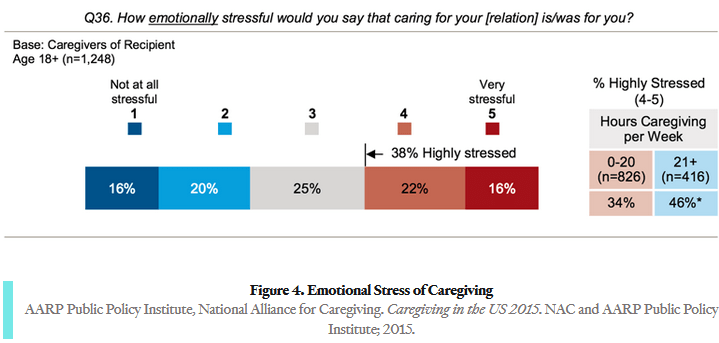
The impact on mental health for those caring for loved ones in extreme situations can manifest in several ways.
- A prisoner to your home – That feeling that you can't leave your child alone in the care of others. I have both experienced this notion and seen it with other families. Even when you can have a respite care worker come into the home to relieve you, a trust factor comes into play. I found this incredibly hard my first time. I felt immense guilt and fear that something could go wrong and my not being there could tip the scales toward catastrophic results.
- Going out as a family – It should be just a normal thing, and to a degree, it is. We are fearless in that we will go and do anything with our son (within reason, of course). However, you will "feel" the looks and the stares. It's unavoidable and another obstacle to overcome. The moment you are in the public eye there is always someone who will look a little bit longer or a child who stares out of curiosity. There is no age range to this, and I don't hold ill will as I understand at a basic level this is a natural reaction we humans have to things we don't understand or are not used to. Even with that understanding, you will still feel like you are in a fishbowl, and if you are sensitive to that, it can potentially drive you back to the safety of your home or your vehicle to escape prying eyes.
- Traveling – One of the hardest things to do as a family. Now, don't get me wrong, I don't think I have ever encountered a company that didn't try and make our experience better. I am always appreciative of that, but the major hurdles often come from some fundamental things like food. If you are like us, you can't count on being able to find food that is suitable for your child on the road (Brutal reality check, not everyone has Mac & Cheese on their menu!). Also, keeping your child comfortable in situations like flying, which isn't exactly comfortable in the best of situations. There is one other major aspect that I'll cover in the next bullet point.
- Toileting – If you have a potty-trained special needs child, I am 100% envious. Our son sadly is not, so we rely on diapers to meet his incontinence needs. Early on this was not an issue until around age five. After that, this is likely your number one nightmare scenario as a special needs parent. Diapers are great until it goes beyond wetting. Picture you with a seven-year-old who has soiled himself early on during a flight. Do you just let it go and have them stay in their dirty diaper? As a parent and human being, that’s the last thing you would want to do. Now the challenge, what do you do?I attempted a changing with my son in an airplane bathroom one time, and it was the first and last time I tried that. Being 5' 11 and 215 lbs., I barely fit into an airplane bathroom as is but somehow thought I could pull it off. I think I managed to make it worse than it was. Looking back on this I can laugh as it feels like I lived an episode of I Love Lucy with everything that could go wrong, going wrong.
The same challenges are there in other public spaces. Accessible stalls, while great, are still not going to be the right fit for trying to change a diaper on a child that is older than five. Not to mention that the accessible stall seems to be coveted by practically everyone who "wants more space" for when they go to the restroom but somehow forget how to be clean about doing so.
How to Make Things Better
Above is just a small portion of the challenges parents of special needs kids face. These things and countless others like education pile up over time. It all can lead to unbearable stress on the family unit. How do we help? I don't have a magic bullet or plan. I am in the trenches every day, and I often can't see past what is in front of me. But if I had to put a few at the top of my list, I would say:
- Tandem shopping carts are a huge game changer for a special needs family. I first encountered these carts in a Target in Florida and have since used them locally at Target and Safeway. If you are unfamiliar, these carts have a large seat built into a cart specifically designed to allow someone with a disability to be in the cart with you as you shop. This should be a no-brainer for every retail store that needs shopping carts.
- Better restrooms and changing tables in the disability restrooms designed to be more than just a changing table for infants that are 4-feet high and can only bear 20+lbs. While we are at it, let's bring back the bigger bathrooms in future airplanes. Not one person on the planet thinks the current smaller form factor bathrooms are a good design, and I can guarantee every special needs caretaker would welcome this change.
If you are still here reading, I thank you for reading through what seems to be a bit of a rant and, again, certainly therapeutic for me. I feel a bit selfish in writing this. My burden isn't your burden, and no doubt you have your own, so please accept my apology and thanks. I guess I have heard so many times the phrase "I can't imagine what it's like" that I thought just maybe I could help paint that picture for those who, at some point in their mind or out loud said, "I can't imagine what it's like to be in your situation."
we demistify diverse communities through research technology
Legal
The Reckoning: Democratizing the Beer Industry
In 1978, former President Jimmy Carter legalized home brewing beer giving rise to what we now know as craft beer. There are currently over 9,000 craft breweries in the U.S. challenging legacy beer brands for market share and consumer mindshare. As beer has evolved, brand offerings have expanded to include non-alcoholic beers and non-beer products like hard seltzers. Beer drinkers have evolved as well. Alcohol consumption has soared, particularly among women ages 21-25 for the first time in history.
Yet, outside of oversexualized ads, the beer industry has largely ignored women in advertising and the c-suite despite the growing number of female founders of craft breweries like Golden Road Brewing and Jack A Lope Brewing Company. Bad behavior and gender disparities are not uncommon in the beer industry. Last year, a brave female founder took to social media to call out sexist and abusive behavior toward women in the industry, leading to resignations, firings, and a new perspective on women's contributions.
In this episode of The New Mainstream podcast, Jessica Infante, Managing Editor of Brewbound discusses gender diversity in the beer industry and what brands need to do to be more inclusive.
we demistify diverse communities through research technology
Legal
Black Consumer Project Wave 2: Exploring Black Americans' Relationship With Financial Services
For decades, research has painted a picture of a Black America that is distrustful of the financial system, hesitant to adopt banking services, and resistant to guidance. While economic disparities and trust deficits exist, banking habits in the Black community are incredibly diverse. In this latest chapter of the Black Consumer Project, we look at how Black Americans manage money today.
What is the Black Consumer Project?
A collaborative effort by ThinkNow and Quantasy + Associates, Black Consumer Project is an in-depth, multi-wave study of Black Americans' economic and cultural contributions. This community has more buying power than ever, and our goal is to uncover its unique perspectives, behaviors, and preferences.
Wave 1 of BCP explored Black Americans' core values, personal goals, layers of identity, and definitions of success. Wave 2 takes a deep dive into their banking behaviors, financial perceptions, and aspirations for the future.
Stream the Black Consumer Project - Financial Services online event here.
Increasing Influence
According to the 2020 Census, the Black population has increased by 5.6% over the past decade. Those who identify as Black in combination with another race group increased by 88.7%. The median household income (HHI) for Black Americans was $44,000 in 2019, meaning that just under half of all households (46%) earned more than $50,000 a year. Those earning more than $100,000 represent 18% of the overall Black population. Education has also increased significantly, with the population of those with a bachelor's degree (23%) doubling since 2010. With a population of 46.9 million, Black Americans wield an impressive $1.4 trillion in buying power.
Motivating Factors
During the first wave, we discovered that Black Americans' definition of success isn't tied to money. Living a healthy lifestyle, owning a business, and giving back to the community ranked higher when compared to non-Black ethnic groups. In this second wave, we explore the relationship between the Black community and finance to better understand current behaviors and aspirations for their financial futures.
See the Data
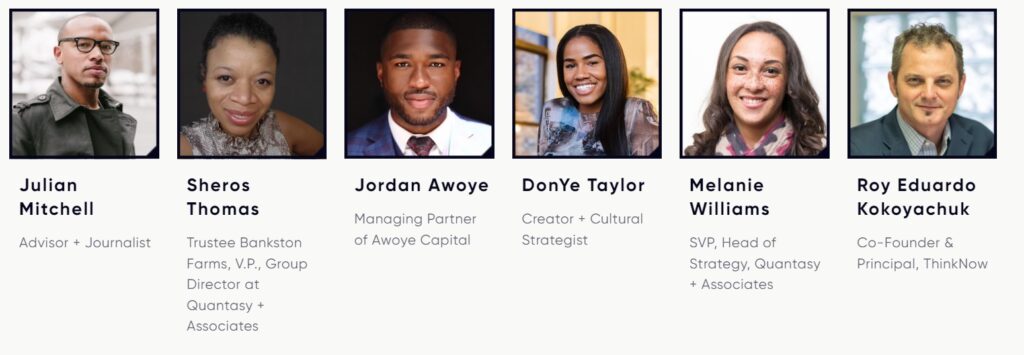
The Black Consumer Project Wave 2 launches Tuesday, July 12th with an online streaming event featuring Quantasy + Associates' Melanie Williams and ThinkNow's Roy Eduardo Kokoyachuk, who'll dive into the data. A panel discussion featuring Jordan Awoye, Managing Partner of Awoye Capital, DonYe Taylor, Creator and Cultural Strategist, and Sheros Thomas, Trustee Bankston Farms, V.P., Group Director at Quantasy + Associates, will follow moderated by Julian Mitchell, Advisor and Journalist.
Stream the Black Consumer Project Wave 2 – Financial Services here.